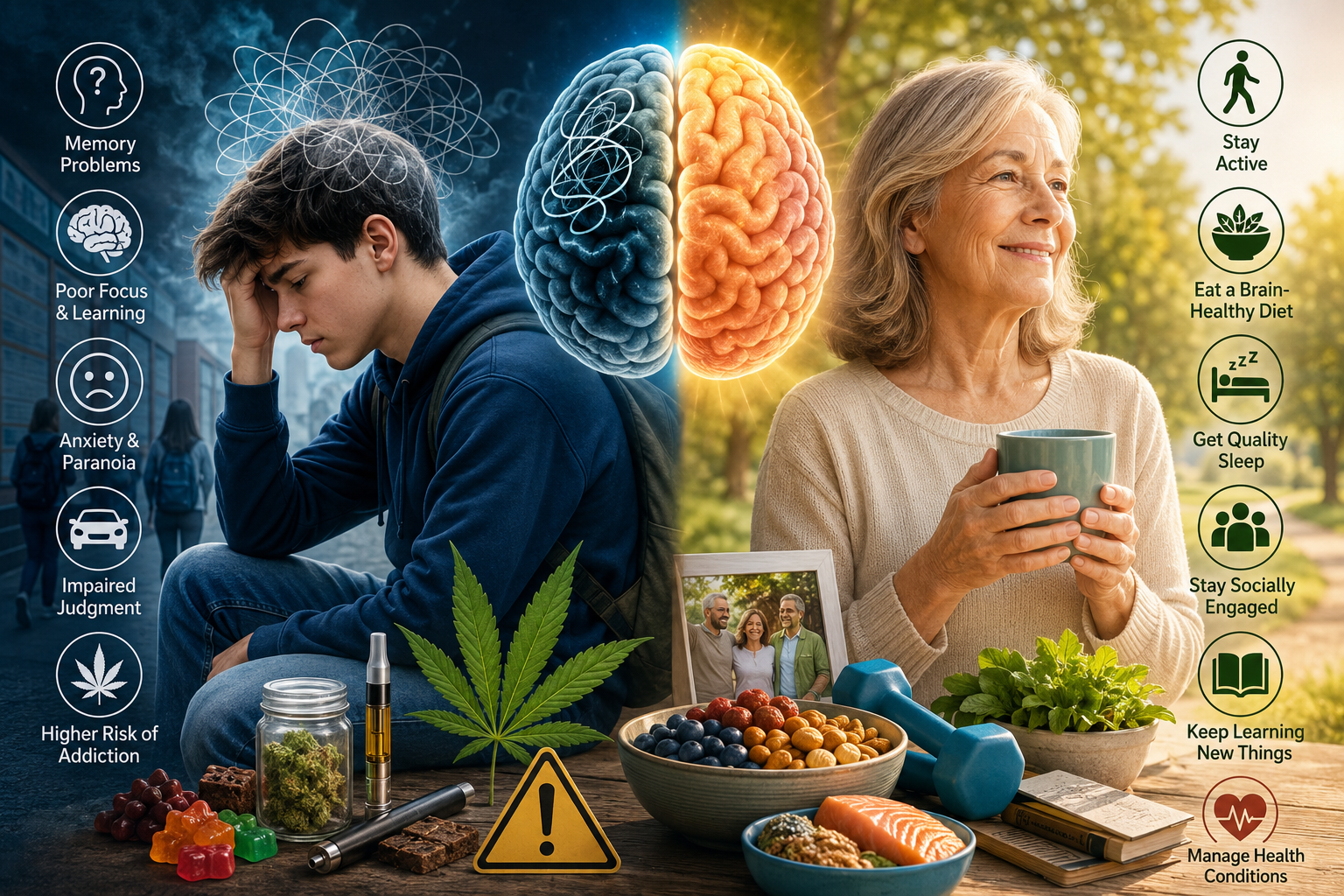
Marijuana affects people differently at different stages of life. For some adults, medical marijuana may be part of a carefully supervised care plan for qualifying health conditions. But for teenagers and young adults, marijuana can carry meaningful risks because the brain is still developing.
At the same time, many older adults are concerned about memory loss, Alzheimer’s disease, and dementia. This has led some people to wonder whether marijuana can protect the brain or prevent dementia.
The Healing Clinics believes patients deserve clear, realistic information about marijuana and brain health—not hype or fear.
During adolescence and young adulthood, the parts of the brain involved in planning, attention, learning, self-control, memory, and decision-making are still maturing.
THC, the intoxicating chemical in marijuana, affects brain signaling. This can be especially concerning for young people who use marijuana frequently, use high-potency THC products, or begin using at an early age.
Young people who use marijuana may experience:
• Problems with memory, learning, and concentration
• Difficulty paying attention in school, work, or daily life
• Impaired coordination and slower reaction times
• Poorer judgment, including unsafe driving decisions
• Increased risk of cannabis use disorder
• Worsening anxiety, paranoia, or panic in some individuals
• A higher risk of psychosis-related symptoms in vulnerable people, especially with early and frequent use
These risks do not mean every young person who tries marijuana will develop long-term problems. However, the risk increases with earlier use, frequent use, and stronger THC products such as concentrates, dabs, and some vape products.
For families, the most important takeaway is simple: delaying marijuana use until adulthood gives the developing brain more time to mature. However, where conditions that might be helped by medical marijuana are concerned, the advantages can outweigh the risks. In addition, relying on a medical marijuana physician with knowledge concerning cannabinoids and their impact on developing brains can help guide parents and their teens.
Today’s marijuana products are not always comparable to products available decades ago. Some flower products, concentrates, vape cartridges, and edibles may contain high levels of THC.
Higher THC exposure can increase the likelihood of uncomfortable or dangerous effects, including:
Parents and caregivers should understand that “natural” does not automatically mean harmless. Like many substances, marijuana can affect health differently based on dose, product strength, method of use, age, mental-health history, and other medications. One of the advantages of using medical marijuana is that the law typically requires each package to be clearly labeled with the product contents. Before even the first dose is given, parents will know how much, if any, THC is in the product.
While research is ongoing concerning marijuana and dementia, Parkinson’s Disease, and other neurological issues often confronted by older adults, there seems to be a three pronged approach at work. First, does it make it worse? Second, is it a preventative? And, third, can it help with symptoms related to neurological conditions in aging adults?
At this time, there is no strong, consistent clinical evidence showing that marijuana prevents Alzheimer’s disease or other forms of dementia.
However, research studying the effects of cannabis on the brain has often focused on adolescents, but a new study from CU Anschutz researchers looks at population-level impacts of cannabis usage on the brain in older adults.
“More older adults are using cannabis. It’s more widely available and is being used for different reasons than in younger folks – such as for sleep and chronic pain,” said Anika Guha, PhD, a clinical psychologist and faculty research associate in the Department of Psychiatry at CU Anschutz. “Plus, people are living longer. We have to be asking, ‘What are the long-term effects of cannabis use as we continue to age?’”
The research team found that cannabis usage in older adults was generally associated with larger volumes in several brain regions and better cognitive function in adults aged 40 to 77. Guha said she was surprised by the extent of the positive findings. But she emphasized that cannabis use studies are difficult with often unknown variables, noting that the constituents and potency of the cannabis products study subjects used were unknown.
Some early laboratory and animal research has explored cannabinoids for inflammation, sleep, pain, agitation, and other symptoms that can sometimes accompany neurodegenerative diseases.
The Healing Clinics encourages older adults to discuss cannabis use openly with a physician knowledgeable in medical marijuana — especially when the patient has memory changes, takes sedatives or blood-pressure medications, or has a history of anxiety, hallucinations, or mental health conditions. To find out if medical marijuana might be a good fit as an addition to your current treatment plan, please contact The Healing Clinics to speak with a specialist.
There is no guaranteed way to prevent Alzheimer’s disease or dementia. However, research supports several healthy habits that may help reduce the risk of cognitive decline or support brain health as people age.
Older adults can support long-term brain health by:
Medical marijuana may help some adults manage qualifying symptoms such as chronic pain, nausea, muscle spasms, sleep difficulties, or certain neurologic conditions, depending on state law and the patient’s medical situation.
For older adults who are considering medical marijuana, here’s a list of recommended steps to get started:
• Start with a medical evaluation from a qualified medical marijuana physician
• Review all medications and health conditions
• Consider lower-THC options when appropriate
• Avoid driving or operating machinery while impaired
• Monitor for dizziness, confusion, falls, anxiety, or worsening memory
• Keep products away from children and grandchildren
At The Healing Clinics, patient education is part of responsible medical marijuana care. A thoughtful consultation can help determine whether cannabis is appropriate, what product types may be safer, and when another treatment option may make more sense.
Occasional forgetfulness can happen with normal aging. But it is important to speak with a healthcare provider when memory issues begin interfering with daily life.
Warning signs may include:
• Repeating the same questions frequently
• Getting lost in familiar places
• Difficulty managing bills or medications
• Major changes in personality or behavior
• Problems following familiar recipes or directions
• Trouble finding common words or participating in conversations
• Unsafe driving or poor judgment
Early evaluation matters because memory changes can have many causes, including medication side effects, depression, vitamin deficiencies, thyroid conditions, sleep problems, infections, and dementia-related illnesses.
Marijuana is not equally risky for every person. Age, health history, product strength, frequency of use, and mental-health vulnerability all matter.
For young people, avoiding or delaying marijuana use can help protect a brain that is still developing. For older adults, the best approach to reducing dementia risk is not relying on marijuana—it is building healthy habits, managing medical conditions, staying active, sleeping well, and seeking evaluation for new memory changes.
The Healing Clinics supports informed, responsible conversations about medical marijuana. Patients and families should always discuss cannabis use and memory concerns with a qualified healthcare professional. To get started, call The Healing Clinics at (318) 227-4088 or click the button below.