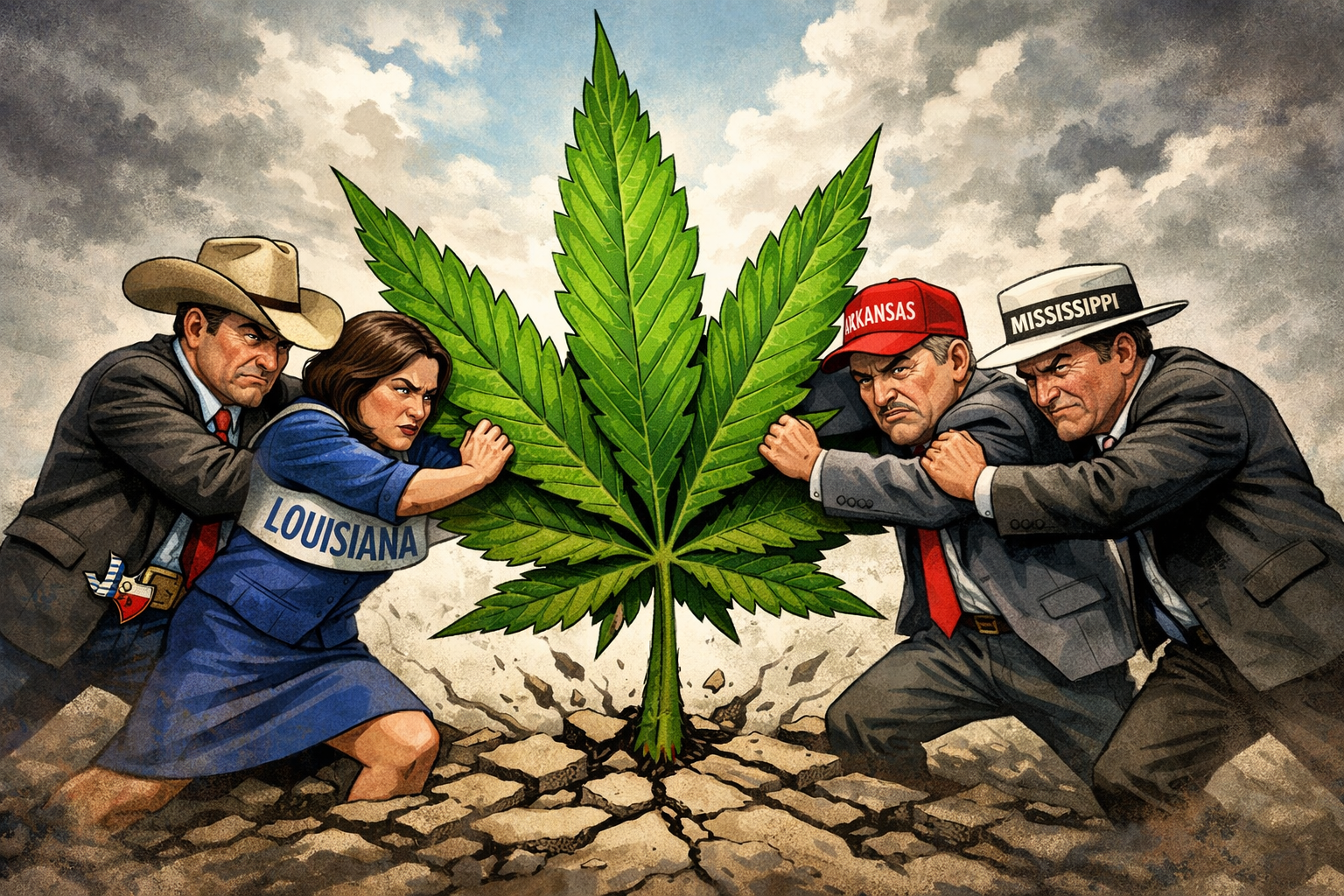
While medical marijuana continues to be widely legal and supported in many states, there are notable examples of pushback or resistance from state governments and political movements in the U.S. in 2025 and 2026. The overall picture is mixed: some states are moving forward or expanding programs, but others are slowing, stalling, or re-examining aspects of cannabis policy.
Where There Is Pushback or Resistance
In Nebraska, a bill aimed at implementing the voter-approved medical cannabis laws stalled in the legislature, seen as a failure amid broader opposition in the chamber.
Some lawmakers in other states have killed or indefinitely delayed cannabis reform bills, including medical legalization efforts in recent years.
Declining participation and legislative debate concerning existing programs can be found in Pennsylvania’s medical marijuana program, where, recently, a drop in registered patients was found, fueling legislative debate about restructuring or reforming the system. Some lawmakers remain divided about moving forward with broader cannabis legalization.
In some states, grassroots initiatives or political campaigns have been launched to repeal or scale back cannabis legalization, especially around recreational use — though these often overlap with discussions about medical access too.
States like Texas have seen contentious political fights over hemp-derived THC products and the scope of medical cannabis programs. Some lawmakers have pushed for restrictive bans that could indirectly limit medical cannabis access, although not all efforts have succeeded.
States That Remain Supportive
Meanwhile, some states remain supportive of their medical marijuana programs and the patients who are participating. Many states are still considering or advancing both medical and recreational cannabis reforms, and forecasts suggest ongoing legalization opportunities in 2026.
As of mid-2025, 40 states, three territories, and DC legally allow medical cannabis, showing broad adoption across the nation. Support remains strong among lawmakers and voters, with polls and trends continuing to show widespread public support for medical marijuana, which influences state policies even where resistance exists. In addition to state law, federal rescheduling efforts could reduce conflict on the state level.
A late-2025 executive order directing federal rescheduling of marijuana to a less restrictive classification is intended to reduce barriers to research and aligns federal policy more closely with state medical programs — though effects are still unfolding.
Focus on Louisiana, Texas, Arkansas, and Mississippi
The “pushback” also looks different, depending on the state. Following is a state-by-state breakdown with extra detail on Texas, Louisiana, Arkansas, and Mississippi.
Texas (big focus)
What’s happening
The medical program expanded in 2025 (HB 46), widening access and operations (e.g., additional qualifying conditions; more product forms; ability for dispensaries to use satellite storage to enable faster pickup/delivery), but it’s still a tightly limited program compared to many states.
Pushback is mostly political/regulatory friction, especially around THC limits and product availability, rather than a push to end medical entirely (the bigger public fight has been around hemp-derived THC products).
A major intra-state political fight has centered on whether to ban hemp-derived THC products; Texas Gov. Greg Abbott vetoed a sweeping THC consumables ban, showing the issue is contentious even among state leaders. Even with HB 46, Texas still has dose/THC constraints (item dosage caps described in reporting), which can limit how medical the program feels for some patients when compared with other states. The loudest pushback in Texas is centered around low-dose consumable hemp rather than the state’s medical marijuana program.
Louisiana (big focus)
What’s happening
Louisiana’s medical program is continuing (not shrinking). The state is extending the program’s sunset to 2030 and shifting retailer regulatory authority to the Louisiana Department of Health (LDH).
The clearest recent state-government pushback in Louisiana is aimed at the broader THC marketplace via hemp THC restrictions, including lower per-serving limits, tighter retail rules, and age requirements. These legislative fights don’t directly repeal medical marijuana, but they often spill over politically and can affect patient access to alternative THC products.
Separately, a newer federal hemp crackdown has been reported as likely to eliminate many hemp-THC products sold in Louisiana, which can change the overall cannabis access landscape even if the medical program remains intact.
Medical marijuana in Louisiana is stabilized/extended, while the “pushback” is more about tightening THC/hemp rules and reshaping regulation.
Arkansas (big focus)
What’s happening
Arkansas has a voter-approved medical marijuana constitutional amendment (2016). Recently, the Arkansas Supreme Court ruled the legislature can amend voter-approved constitutional amendments, which is a big deal for how protected the medical program is from future rollbacks/changes.
Reporting notes the legislature has amended the medical marijuana amendment many times (28 times, as reported by local media), reinforcing that the program is subject to ongoing legislative shaping.
The pushback in Arkansas is less about ending medical outright and more about legislative control, tightening the program’s scope/operations and the legal structure, making future changes easier (with a supermajority threshold). The key pushback signal is governance power shifting toward lawmakers, enabling more restrictive edits over time if political winds shift.
Mississippi (big focus)
What’s happening
Mississippi’s program is active, but it’s known for very strict advertising/marketing limits. Courts have upheld these restrictions, and the U.S. Supreme Court declined to take a challenge (leaving the limits in place). There’s also ongoing policy debate about program adjustments (e.g., advocates pushing for higher potency limits / “right-to-try” style changes).
The advertising ban is a state-level regulatory constraint that materially affects market visibility and patient education (billboards, many media ads, mass messaging restrictions, etc.).
Politically, reforms/expansions can be uneven year to year (some advocates argue expansion efforts have stalled). Mississippi is not trending towards repeal, but is more focused on tight guardrails and incremental fights over access/potency.
The Bottom Line
Medical marijuana is broadly legal and expanding in many states, with the vast majority having active programs. But there is pushback in the form of stalled bills, political resistance, regulatory debates, and citizen initiatives in some states. These efforts are usually targeted at the scope or implementation of cannabis policy rather than repealing medical use outright. As for the four states where you’ll find The Healing Clinics, the programs in those states are safe and likely to expand in the coming years. If you’re ready to get started on your healing journey with medical marijuana, click the button below.