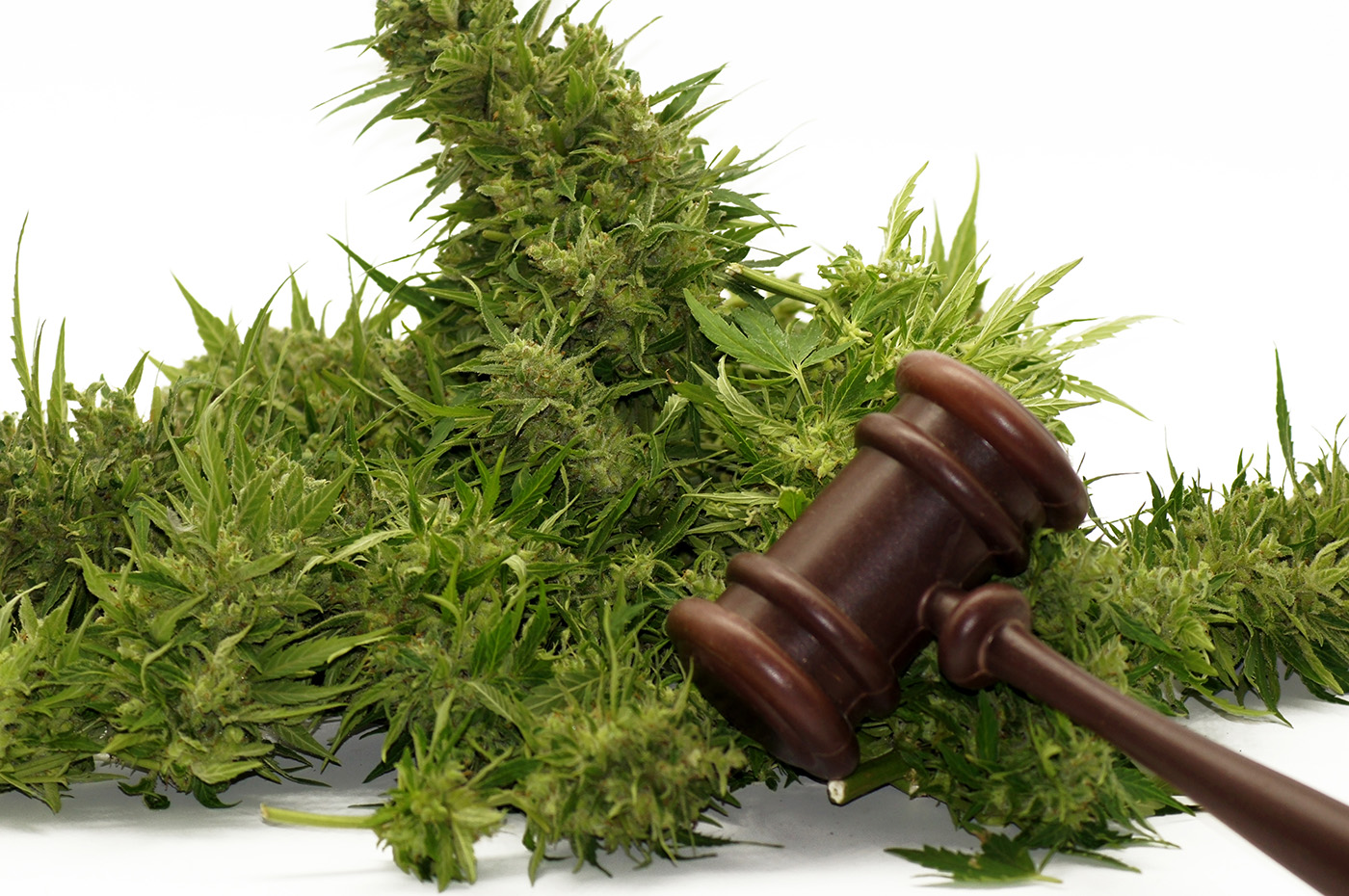
President Trump signed an executive order on Thursday, December 18th, 2025, that would initiate the process to reclassify marijuana from a Schedule I to a Schedule III drug under the Controlled Substances Act. Marijuana is currently classified alongside drugs like heroin and LSD, defined as having “no currently accepted medical use and a high potential for abuse”.
Proposed Status (Schedule III)
Moving marijuana to Schedule III would place it alongside substances like ketamine and anabolic steroids, which are considered to have a moderate to low potential for dependence and an accepted medical use.
Rescheduling marijuana or any drug is a formal administrative process. While the President can direct agencies to act, the final approval authority rests with the Drug Enforcement Administration (DEA), which is part of the Department of Justice (DOJ). The process initiated by the Biden administration in 2024 had stalled within the DEA.
Rescheduling marijuana would not make marijuana fully federally legal, nor would it override state-level prohibition. However, it would have significant impacts:
Tax Relief: State-licensed cannabis businesses would no longer be subject to IRS Code Section 280E, which currently bars them from taking standard business deductions, potentially offering major financial relief.
Research: It could lead to a “tremendous amount” of research into medical uses that is currently difficult to conduct due to the Schedule I restrictions.
Medical Recognition: It would mark the first time the federal government formally recognizes cannabis as having an accepted medical use.
Industry and Banking: The move could attract new investment, ease some banking barriers, and potentially allow U.S. plant-touching cannabis companies to list on major stock exchanges like Nasdaq and NYSE.
What will Rescheduling Mean for Medical Marijuana on a State Level?
The possibility of rescheduling marijuana has brought about a lot of hypothesizing about what it will mean for the industry on a state level. Currently, most state systems operate under a “recommendation” rather than a prescription to accommodate the federal DEA rating for marijuana. The state appoints or approves growers who grow and package the products and deliver them to state-approved dispensaries. Medical marijuana doctors or state-licensed physicians write recommendations according to the state’s laws for patients.
Some say that, if marijuana is rescheduled, medical marijuana products would likely have to pass FDA requirements to be prescribed. If the FDA takes over quality control rather than the growers and state agriculture departments, requirements and demand for products will change. As has been the case for the three products that have been approved by the FDA (Epidiolex for seizure disorders, and synthetic CBD drugs Marinol/Syndros (dronabinol) and Cesamet (nabilone). All three of these can be prescribed and picked up at your local pharmacy.
Some propose that, in case of FDA approval, the products would likely then be produced for national consumption by a larger national or global pharmaceutical manufacturer. For example, Epidolex is made by Jazz Pharmaceuticals, a global biopharmaceutical company headquartered in Dublin, Ireland. Local growers and dispensaries may continue to make small batch quantities for products that don’t meet FDA requirements, but the products that do will become available in any pharmacy across the country with a doctor’s prescription. State requirements for those drugs will also no longer be applicable and patients could legally carry those FDA-approved products across state lines.
“I, among others in the industry, am very concerned that Trump’s news of rescheduling [marijuana] is a false flag!” said Josh Kesselman, the founder and public face of RAW Rolling Papers and the new publisher of High Times Magazine. “Moving THC to Schedule III would allow big pharma to launch their synthetic THC pills available by prescription only at huge costs and subject current dispensaries to a whole new set of felonies,” Kesselman added in a statement.
How does the process of rescheduling marijuana work?
The president’s anticipated move follows a years-long charm campaign waged by cannabis businesses and their lobbyists.
It also follows an attempt to ease federal marijuana laws begun in October 2022 by former President Joe Biden.
Under Biden, health regulators declared in Aug. 2023 that cannabis has a “currently accepted medical use” in the United States – a key finding for cannabis to fit into Schedule 3, a designation for drugs that have abuse potential but also medical benefits.
That was the justification former Attorney General Merrick Garland gave in a May 16, 2024, memo that “there is, at present, substantial evidence that marijuana does not warrant control under Schedule I of the CSA” along with a subsequent formal proposed rule. From there, the process stalled out.
The typical federal administrative law process requires a formal public comment period. Many comments from opponents of rescheduling marijuana requested that the DEA first put the matter before a public hearing. Failing to do so would have exposed marijuana rescheduling to a legal challenge, analysts said at the time.
Former DEA Administrator Anne Milgram scheduled hearings before the Drug Enforcement Administration’s top administrative law judge to begin in December 2024. However, those hearings were scuttled on the eve of Trump’s inauguration – in part because pro-rescheduling parties alleged the DEA was showing “bias” towards keeping cannabis a Schedule 1 drug.
Summary
Though rescheduling will definitely have an impact on state-level medical marijuana businesses and patients, it’s not all negative. More freedom afforded to marijuana research will definitely supply additional insights into effectiveness, safety, and even expanded applications. It could also allow some well-deserved tax relief for marijuana businesses. The only word that comes to mind is “pivot”. If the DEA finally approves rescheduling marijuana and sets up requirements and policies to accommodate that, the marijuana industry in the United States better be prepared to pivot to make their business continue to be relevant, or they’re likely to be left out of an industry that simply refuses to stop expanding.
If you’re ready to start your healing journey with medical marijuana, The Healing Clinics is here to get you started and walk with you every step of the way. Just click the button to start.



Gwen
December 18, 2025I believe that cannabis should be viewed the same was as alcohol, and should be dealt with as such. Alcohol has no medical uses.