A Quick History of Marijuana Laws in the U.S.
From Prohibition to Medical Use
Marijuana has had a long and complicated legal history in the United States:
- • 1937 – Marijuana Tax Act: Effectively made cannabis illegal nationwide
-
- • 1970 – Controlled Substances Act: Classified marijuana as a Schedule I drug (same category as heroin), meaning: no accepted medical use and high potential for abuse.
-
- • 1996 onward: States like California began legalizing medical marijuana
-
- 2020s: Most U.S. states legalized medical marijuana in some form
Despite widespread state legalization, marijuana remained federally illegal—until now.
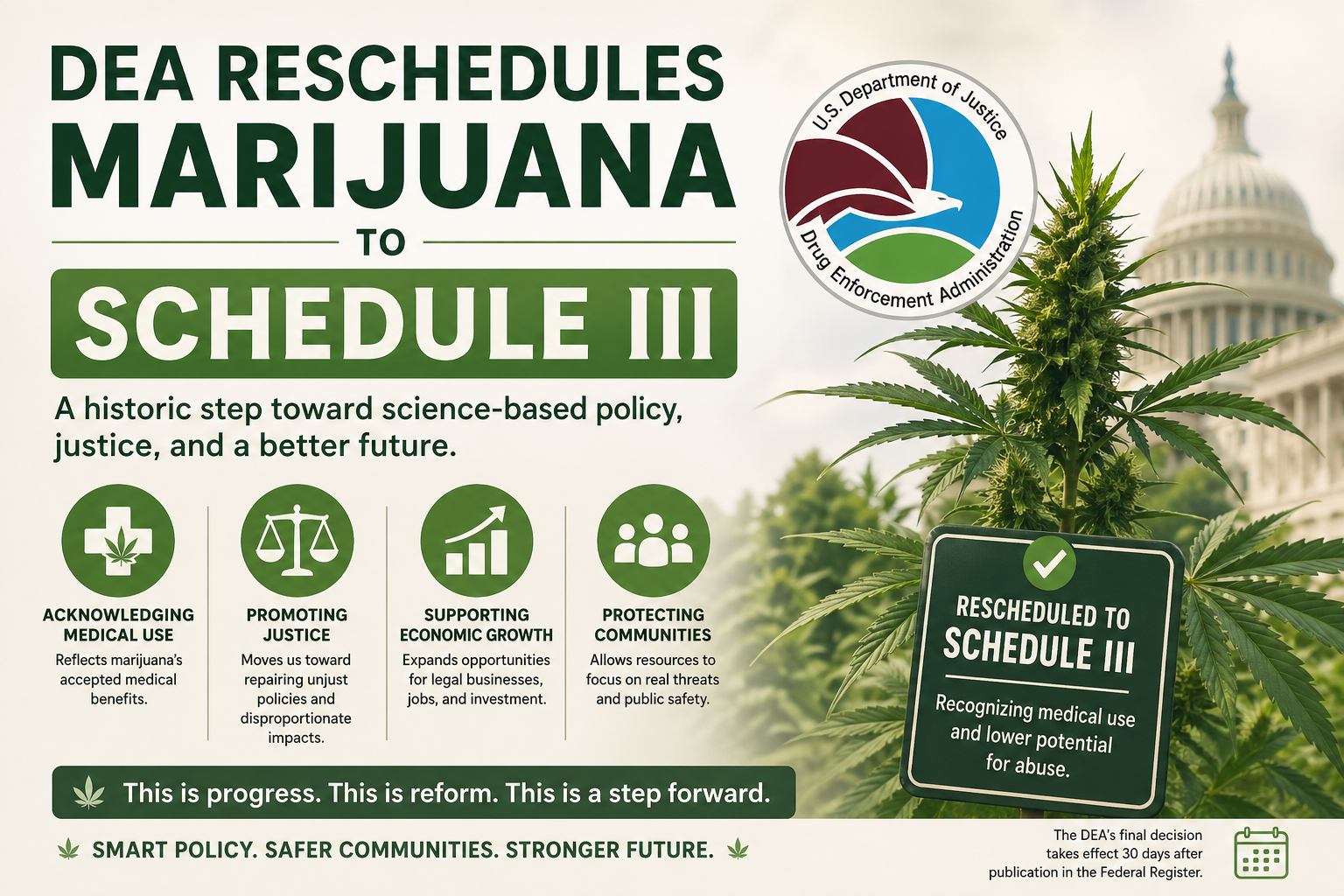
The move to Schedule III is the first time the federal government has formally recognized that marijuana has medical value.
What Is Schedule III?
Drugs are categorized into “schedules” based on risk and medical use:
- • Schedule I: No accepted medical use (e.g., heroin, LSD)
-
- • Schedule II: High risk but accepted use (e.g., oxycodone)
-
- • Schedule III: Moderate risk with accepted medical use (e.g., ketamine, certain steroids)
-
By moving marijuana to Schedule III:
- • The government now recognizes legitimate medical benefits
-
- • It is considered less dangerous than previously classified
-
- • Research and medical use become easier to study and support
-
What Changed in 2026?
In April 2026, the federal government:
- • Reclassified FDA-approved cannabis drugs and state-licensed medical marijuana products as Schedule III
-
- • Created pathways for federally registered medical marijuana operations
-
- • Opened the door for expanded research and prescribing frameworks
However, this change is limited:
- • Not all cannabis products are included yet
-
- • Recreational marijuana is still federally illegal
-
- • Full rescheduling of all marijuana is still under review
What This Means for Medical Marijuana Patients
1. Reduced Stigma Around Medical Cannabis
For decades, patients faced stigma because marijuana was labeled as having “no medical value.”
Now:
- • The federal government officially acknowledges its medical use
-
- • Patients may feel more comfortable discussing cannabis with doctors
-
2. More Research = Better Treatments
Before this change:
- • Research was extremely restricted
-
- • Scientists had limited access to cannabis
-
Now:
- • Universities and medical institutions can study cannabis more easily
- • Expect better data on:
- Dosage
-
- Safety
-
- Effectiveness for conditions like pain, PTSD, and migraines
-
3. Potential for Prescription-Based Access (Long-Term)
Schedule III drugs are typically prescription medications.
However:
- • Most cannabis products are not yet FDA-approved
-
- • Doctors currently recommend, not prescribe, medical marijuana in most states
-
In the future, this could change—but not immediately. Your team at The Healing Clinics will keep you up to date on any changes that could impact you as a medical marijuana patient.
4. No Immediate Changes to State Programs
If you are a patient in a state like Louisiana, Texas, or Arkansas:
- • Your current medical marijuana program stays the same
-
- • You still need:
- A doctor’s recommendation
-
- A state-approved dispensary
In other words, your access today likely does not change overnight.
5. No Federal Legalization (Yet)
This is one of the biggest misunderstandings.
Rescheduling does NOT mean:
- • Marijuana is federally legal
-
- • You can transport it across state lines
-
- • Employers must allow its use
-
6. Possible Cost and Access Improvements Over Time
This change could lead to:
- • More competition in the medical cannabis market
-
- • Lower costs for patients
-
- • Expanded availability of regulated products
It may take time, but this is one of the most important long-term benefits.
What Has NOT Changed
It’s just as important to understand what stays the same:
- • Marijuana is still a controlled substance
-
- • Federal criminal penalties still exist
-
- • Insurance typically does not cover cannabis
-
- • Workplace drug testing rules remain unchanged
-
The Bottom Line for Patients
The DEA’s move to Schedule III is a major step forward—but not the finish line.
What it means for you:
✔ More acceptance of medical marijuana
✔ Better research and future treatments
✔ Potential for improved access over time
What it does NOT mean (yet):
✘ Full legalization
✘ Immediate changes to how you get cannabis
✘ Insurance coverage or prescriptions nationwide
Final Thoughts: A Turning Point in Medical Cannabis
After nearly 100 years of strict prohibition, the federal government is finally catching up with what patients and doctors have known for years:
Medical marijuana has real therapeutic value.
While this change won’t transform everything overnight, it marks the beginning of a new era—one where medical cannabis is treated more like medicine and less like a criminal issue.
If you’re ready to get started on your healing journey with medical marijuana, your Healing Specialists and Medical Marijuana doctors are ready to walk with you. Click the button below to get started.



Kimberly
April 30, 2026Thank you for sharing this information, while I do hope it becomes recreational legal,I am thankful for medical.