Symptoms, Causes, and How to Treat It
Cannabis withdrawal symptoms are estimated to affect twenty to 50% of daily users. This typically happens when someone who regularly uses marijuana suddenly stops or cuts back, especially if there is heavy use. The body can still become used to cannabis over time, so stopping can lead to uncomfortable symptoms. Among those who are affected, symptoms can include appetite changes, nausea and vomiting, mild tremors, temperature dysregulation, irritability, anxiety, and mood changes. As a patient and especially as a recreational user, it is very important to educate yourself about potential symptoms.
What Is Cannabis Withdrawal?
Cannabis withdrawal is a set of symptoms that occur when your body adjusts to not having THC (one of the cannabinoids in marijuana).
Over time, your brain adapts to THC. When you stop using it, your system has to “reset,” and that’s what causes withdrawal symptoms.
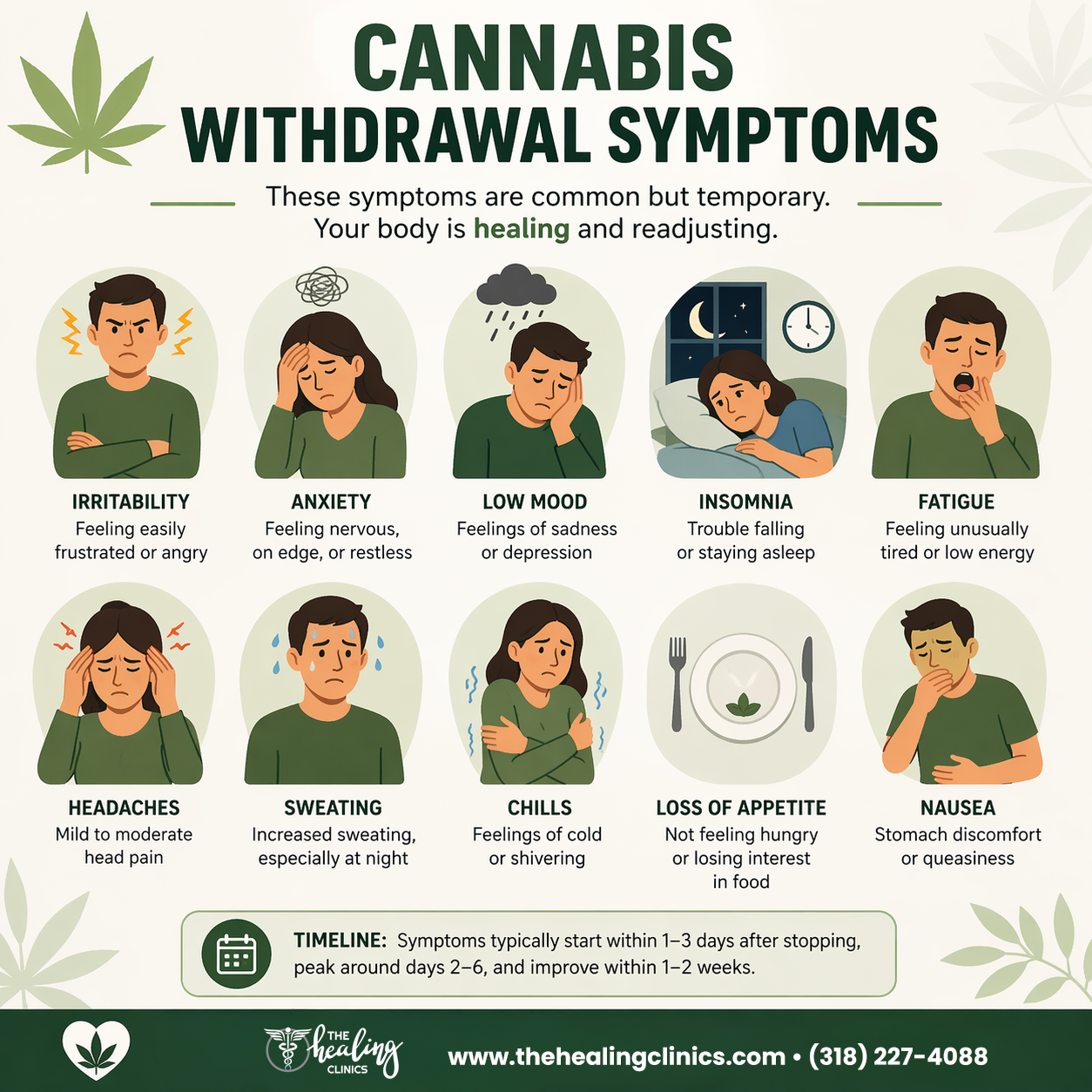
Common Cannabis Withdrawal Symptoms
Most symptoms are not dangerous, but they can feel very uncomfortable.
Emotional Symptoms
- Irritability or mood swings
- Anxiety or restlessness
- Depression or low mood
- Trouble concentrating
-
Physical Symptoms
- Headaches
- Sweating (especially night sweats)
- Chills
- Fatigue
-
Sleep and Appetite Changes
- Insomnia (trouble falling or staying asleep)
- Vivid or strange dreams
- Loss of appetite
- Mild stomach discomfort
-
When Do Symptoms Start and How Long Do They Last?
- Start: Usually within 24–72 hours after stopping
- Peak: Around days 2–6
- Duration: Most symptoms improve within 1–2 weeks
- Sleep issues: Can last a few weeks longer
The more frequently or heavily someone used cannabis, the stronger the withdrawal symptoms may be.
Why Cannabis Withdrawal Happens
Cannabis affects something called the endocannabinoid system, which helps regulate mood, sleep, appetite, and stress.
When THC is used regularly:
The brain reduces its natural cannabinoid activity
t becomes dependent on THC for balance<
When THC is removed:
The brain temporarily struggles to rebalance itself
This causes withdrawal symptoms
Think of it like your brain “relearning” how to function normally without cannabis.
How to Treat Cannabis Withdrawal Symptoms
Most people can manage cannabis withdrawal at home with simple strategies.
1. Stay Hydrated and Eat Regularly
- Drink plenty of water
- Eat light, healthy meals even if you’re not very hungry
2. Improve Sleep Naturally
- Stick to a regular bedtime
- Avoid screens before bed
- Try relaxation techniques (deep breathing, meditation)
3. Manage Stress and Anxiety
- Light exercise (walking, stretching)
- Mindfulness or breathing exercises
- Talking to a friend or counselor
4. Over-the-Counter Support (If Needed)
- Pain relievers for headaches
- Melatonin for sleep (short-term use)
5. Gradual Reduction (Tapering)
- Some people find it easier to slowly cut back instead of stopping all at once
When to Seek Medical Help
Patients of The Healing Clinics should contact us if:
- Symptoms feel severe or overwhelming
- You have a history of anxiety, depression, or other mental health conditions
- You’re struggling to stop using cannabis on your own
Your Healing Team can provide support, counseling, and in some cases, short-term medications.
Key Takeaways
- Cannabis withdrawal is real, but usually not dangerous
-
- Symptoms include irritability, insomnia, anxiety, and appetite loss
-
- Most symptoms improve within 1–2 weeks
-
- Simple lifestyle changes can make a big difference
-
- Help is available if symptoms are difficult to manage
If you are not a patient of The Healing Clinics, you can get started on your healing journey by clicking the button below.