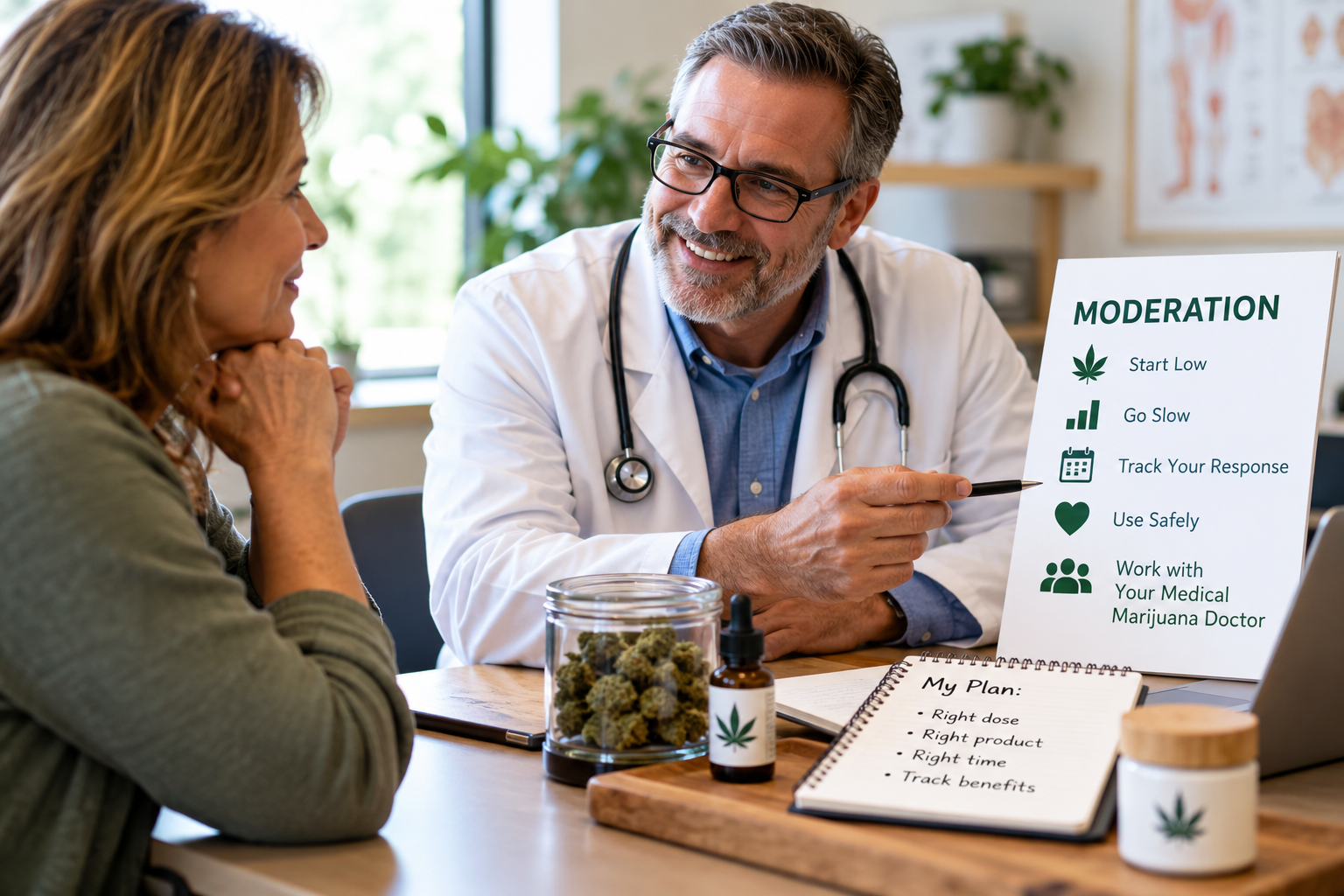
We know how much alcohol is considered moderate consumption. But what about marijuana? Understanding how much is enough—and when it may be too much—is an important part of using medical cannabis responsibly.
For generations, Americans have been encouraged to practice moderation when consuming alcohol. Public health organizations have developed guidelines to help people understand the risks of drinking too much, and physicians routinely discuss alcohol consumption with their patients. But as medical marijuana becomes more widely available, an important question deserves greater attention: What does moderation look like when consuming marijuana?
Unlike alcohol, marijuana does not have a universally accepted national guideline that defines moderate consumption. There is no simple equivalent to one glass of wine or two beers that applies to everyone.
That does not mean moderation is any less important. In fact, for people using marijuana to manage medical conditions, understanding how much to consume, how often to consume it, and when to reconsider their use can be essential to a responsible treatment plan. Those who are using medical marijuana do have the important addition of a medical marijuana doctor to help guide them.
Alcohol Has Moderation Guidelines. Why Doesn’t Marijuana?
Alcohol has been studied extensively for decades, and public health experts have developed standardized ways to measure consumption. Marijuana presents a different challenge.
Cannabis products vary dramatically in their chemical composition, potency, delivery methods, and effects on individuals. For example, a marijuana product containing 5% THC may produce a very different experience from a concentrate containing 80% THC.
Similarly, consuming 5 milligrams of THC in an edible is not directly comparable to smoking marijuana containing an equivalent amount of THC. The body absorbs and processes these products differently.
Factors such as age, medical conditions, medications, previous cannabis exposure, and individual sensitivity further complicate the picture.
For these reasons, there is currently no universally accepted U.S. public-health standard defining a moderate amount of marijuana consumption.
That does not mean there are no guidelines at all. Researchers and health organizations have developed recommendations for reducing cannabis-related risks, including Canada’s Lower-Risk Cannabis Use Guidelines. These recommendations emphasize lower-potency products, avoiding frequent or intensive use, and understanding individual risk factors. Again, patients of The Healing Clinics can contact them to get help and guidance with individual tolerances and help to avoid over consumption while also providing the best options for treating their condition.
More Marijuana Does Not Necessarily Mean More Relief
One of the most important things medical marijuana patients should understand is that consuming more cannabis does not automatically produce better therapeutic results.
Some patients use medical cannabis to seek relief from chronic pain, nausea, muscle spasms, or other symptoms. However, individual responses vary, and the scientific evidence supporting cannabis treatment differs substantially by condition.
A patient may discover that a smaller amount provides adequate symptom relief while producing fewer unwanted effects. This is an important principle of responsible medical treatment: There should be meaningful symptom improvement with the lowest practical level of risk—not consuming the largest amount possible.
Understanding Cannabis Tolerance: When Your Usual Amount Stops Working
Another reason moderation matters is the development of tolerance.
Tolerance occurs when the body becomes less responsive to a substance after repeated exposure. A medical marijuana patient might initially experience symptom relief with a relatively small amount of THC. Over time, however, the same amount may seem less effective.
The temptation is to consume more.
Unfortunately, repeatedly increasing consumption can contribute to a cycle in which patients need larger amounts to achieve familiar effects. Frequent cannabis use can also increase the risk of developing cannabis use disorder, a condition in which someone has difficulty controlling their consumption despite negative consequences.
According to the CDC, warning signs can include needing more marijuana to achieve the same effect, using more than intended, difficulty cutting back, and experiencing withdrawal symptoms when stopping.
A patient experiencing reduced benefits should not automatically increase their THC consumption.
Instead, it may be time to consult their physician about whether their treatment approach, frequency of use, product selection, or dosage needs reassessment. Some patients may benefit from discussing a medically supervised reduction or tolerance break. Others may need a different strategy for managing their symptoms.
What Does Responsible Marijuana Consumption Look Like?
Although there is no universal moderation limit for cannabis, several principles can help patients make more informed decisions.
1. Start Low and Go Slow – Patients should work with a knowledgeable clinician to identify an appropriate starting approach and avoid unnecessary dose increases. This is particularly important for patients who are new to cannabis or returning after a period without use.
2. Pay Attention to THC Potency – Not all marijuana products are created equal. Higher THC concentrations can increase the likelihood of adverse effects, particularly among people who have little previous experience with cannabis. A lower-THC product may be more appropriate for some patients, depending on their symptoms, medical history, and treatment goals.
3. Understand How Different Products Work – Smoking, vaping, tinctures, and edibles can produce different effects. Edibles deserve particular caution because their effects can be delayed. The CDC reports that intoxicating effects may take 30 minutes to two hours to become noticeable, and their duration may be longer than expected. Taking additional THC before the first amount has fully taken effect can lead to accidental overconsumption. Smoking cannabis also presents respiratory risks, and vaping is not risk-free. Be sure to speak to your doctor about the most effective delivery method for you.
4. Monitor How Often You Consume Cannabis – For non-medical consumers, evidence-based lower-risk recommendations encourage avoiding daily or near-daily consumption. However, some medical patients may follow clinician-directed schedules that differ from recreational-use recommendations. For these patients, moderation means following an individualized treatment approach, regularly evaluating benefits and side effects, and avoiding unnecessary consumption.
5. Keep Track of Your Results – A simple cannabis journal can help patients and their physicians evaluate whether treatment is meeting its intended goals. Consider recording the product used, THC and CBD content, amount consumed, time of use, symptoms before and after treatment, and any unwanted effects. This information may be more useful than relying on memory when discussing treatment adjustments.
6. Consider Your Overall Health
Cannabis can interact with prescription medications, including certain sedatives and other drugs that affect the central nervous system. Older adults may be especially vulnerable to dizziness, falls, and medication interactions. Cannabis should not be mixed with alcohol, and patients should never drive while impaired. People who are pregnant or breastfeeding should avoid cannabis.
Can You Consume Too Much Medical Marijuana?
Yes.
Although a fatal overdose caused solely by cannabis is considered unlikely, consuming excessive THC can cause significant physical and psychological distress.
Some individuals experience severe anxiety, panic, confusion, rapid heartbeat, paranoia, or repeated vomiting.
Heavy, long-term cannabis use can also contribute to cannabinoid hyperemesis syndrome (CHS), a condition associated with recurring episodes of severe nausea and vomiting.
These potential complications reinforce an important distinction:
Marijuana may have medical applications, but medical use does not make a substance automatically harmless.
Just as patients should follow appropriate directions when taking prescription medications, medical cannabis deserves a thoughtful and informed approach.
Moderation Is Not About Denying Patients Relief
Patients living with chronic or difficult-to-manage medical conditions often seek marijuana because other treatments have provided inadequate relief or caused unwanted side effects.
The purpose of encouraging moderation is not to discourage patients from exploring medical cannabis when appropriate.
It is to help them make informed decisions, recognize potential risks, and evaluate whether their treatment is providing meaningful improvement.
For some patients, cannabis may become part of a broader treatment plan that includes prescription medications, physical therapy, behavioral health services, lifestyle changes, or other medical care.
The ultimate goal should be improved health and quality of life—not simply increased cannabis consumption.
Your Healing Journey Deserves Compassionate and Accessible Care
As medical marijuana becomes more accessible, patients may be tempted to think that obtaining a medical marijuana recommendation is the final step in their treatment journey.
But receiving a recommendation is only one part of responsible care.
Patients deserve the opportunity to ask questions, discuss their concerns, understand potential side effects, and learn how cannabis might fit into their overall healthcare plan.
A knowledgeable medical marijuana physician can help patients consider important questions:
• Is medical marijuana appropriate for my condition?
• What are the potential benefits and risks?
• How might THC and CBD affect me differently?
• Could marijuana interact with my existing medications?
• How will I recognize when my consumption may be excessive?
• When should I speak with my medical marijuana doctor?
These conversations are especially important because cannabis affects individuals differently, and one patient’s experience should never be considered a universal treatment standard.
The Healing Clinics: Helping You Make Informed Decisions Along Your Healing Journey
At The Healing Clinics, we believe your medical marijuana evaluation should be about more than simply determining whether you qualify.
It should be about you, your health, your concerns, and your healing journey.
Moderation is an important part of responsible medical marijuana use, but patients should not have to figure everything out on their own.
Consulting a knowledgeable medical marijuana doctor provides an opportunity to discuss potential benefits, understand risks, review medication interactions, and develop realistic expectations.
Whether you are considering medical marijuana for the first time or have been a patient for years, ongoing communication with a qualified physician can help you make safer, more informed decisions.
Because when it comes to medical marijuana, more is not always better—and having the right medical guidance matters.
Your healing journey is personal. Your medical marijuana care should be, too.
Contact The Healing Clinics today to schedule your medical marijuana evaluation and take the next step in your healing journey with knowledgeable medical guidance.